The book before the clearance
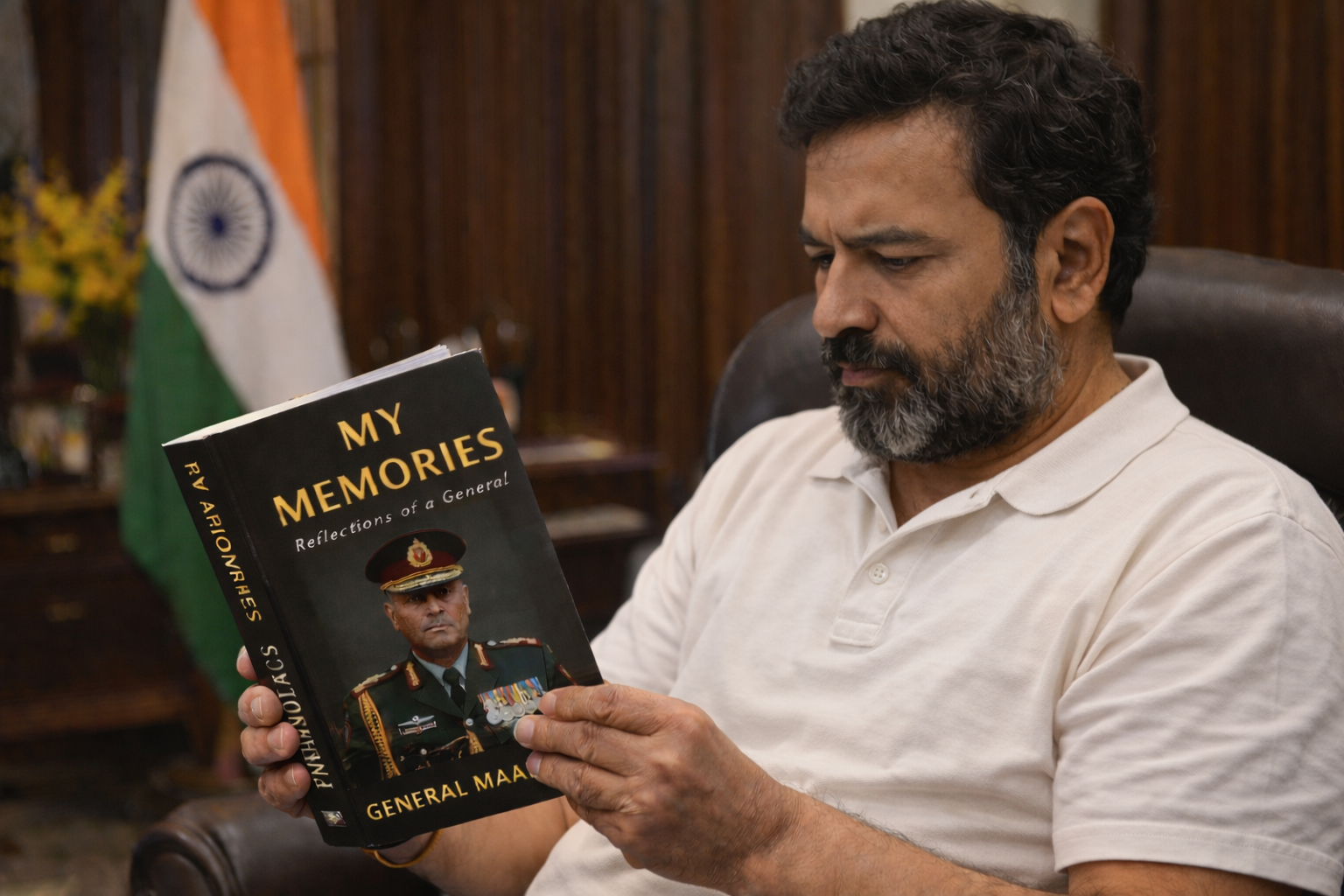
Retirement did not arrive for General Marrunga with bitterness.
It arrived with silence.
The salutes ended…
The staff cars vanished…
The secure lines went dead…
For a man who had spent four decades at the center of command structures, silence was not peace…it was displacement.
And displacement, if left unattended, looks for relevance.
Within months of retirement, Marrunga’s calendar began filling again—quiet lunches, off-the-record dinners, “strategic discussions” hosted in private residences rather than official buildings.
The faces were familiar but no longer uniformed.
Former ministers…
Think-tank fellows…
Media editors…
And, eventually, the Leader of the Opposition.
The LoP was courteous, careful, and patient. He never asked for criticism. He asked for reflection…
“What changed?”
“What was lost?”
“What mistakes are being repeated?”
Marrunga answered cautiously at first.
Then freely.
Because the questions were flattering.
They framed him not as a man passed over,
but as a voice ignored…
The suggestion came casually…
“You should write,” someone said.
“Not memoirs—analysis.”
A book about:
- erosion of institutions
- politicisation of defence
- centralisation of command
- disregard for professional military advice
None of it would be illegal…
None of it would be provable either…
Opinion, after all, is the safest weapon.
Marrunga hesitated. He knew the rules. Retired officers required government clearance before publishing material touching national security or policy.
But the manuscript, he told himself, would be careful…
Strategic…
Conceptual…
And besides… what harm could reflection do?
The book was written quickly…
Too quickly…
Not because Marrunga lacked discipline—but because he now had something he hadn’t had before:
An audience waiting…
Chapters sharpened…
Language hardened…
Neutral observations tilted…
Where once he might have written “policy divergence”, he now wrote “systematic sidelining.”
Where once he might have said “doctrinal evolution”, he wrote “dangerous adventurism.”
The government was never named directly.
But it didn’t need to be….
Everyone knew who the villain was meant to be.
Before the manuscript was submitted for mandatory clearance, Marrunga made a decision he would later justify as “informal consultation.”
He submitted a draft…
Not with the ministry…
Not with the armed forces’ review board…
But with the Leader of the Opposition.
The LoP read it in silence…
Then smiled…
This wasn’t just a book.
It was ammunition…
Quotes were marked…
Paragraphs flagged…
Lines extracted and reshaped into talking points…
Within weeks, unnamed “sources” began citing concerns raised by a “former senior military commander.”
The book hadn’t been published.
But its arguments were already circulating.
Inside South Block, the response was clinical.
No outrage…
No public reaction…
Just a file opened quietly…
Timeline noted…
Clearance rules highlighted…
Unpublished dissemination logged…
The issue wasn’t dissent.
It was process.
And process, when violated by those who once enforced it, leaves a bitter taste.
When Marrunga finally submitted the manuscript for approval, the response was delayed.
Weeks passed…
Then months…
Questions were sent back…
“Clarify sources.”
“Remove speculative sections.”
“Redact operational references.”
Each query trimmed the edge.
Each revision dulled the blade.
What returned was not censorship.
It was neutralisation.
The version that would eventually be approved.. if ever… was not the one the LoP had already read.
By then, approval hardly mattered…
The book’s real job was done.
Television debates referenced it…
Opinion columns paraphrased it…
Opposition speeches echoed its tone…
The government, now framed as defensive, faced questions not because of new facts—but because of old authority repurposed.
Marrunga watched this unfold with mixed emotion.
He told himself he had warned the nation.
Others told him he had been wronged.
Both were comforting narratives.
General Marrunga never breaks the law…
He never leaks secrets…
He never names classified operations…
What he does instead is subtler… and more common.
He converts institutional legitimacy into political narrative.
The uniform is gone.
The authority remains…
And when authority speaks… especially after silence…
people listen.
Whether they should,
is a different question.
Disclaimer:
This is a work of fiction. All characters, events, dialogues, and situations are imaginary. Any resemblance to real persons, living or dead, or actual events is purely coincidental. This content is intended for storytelling and thought exploration only.







Post Comment